

When you’re choosing internal doors for one room, it is easy to think in terms of style alone. You find a design you like, check the size and move on.
But when you’re specifying doors for a whole-house renovation, a multi-plot development, an HMO conversion, or a premium refurb, the conversation changes completely.
At that scale, doors stop being an isolated design choice and become part of the wider specification strategy. They affect the visual consistency of the property, the practical flow of the project, how easily fire doors and glazed options can be integrated and how the finished space is perceived by buyers, tenants or clients.
That is why choosing the right door range matters far more than simply choosing a door that looks good on its own. When choosing a door range for whole-home and multi-plot projects, it is essential to make sure the doors complement and improve the property’s style, as this is a key consideration for achieving consistency, along with durability, regulatory compliance and coming in on budget.
In this guide, we look at how to approach that decision properly. Whether you’re a developer, renovation lead, architect or interior designer, it will hopefully help you choose a range of internal doors that works not just in theory, but across the full reality of a live project. By understanding these key considerations, you can make an informed decision that improves both the look and function of the space you’re creating.
Why Choosing a Complete Door Range Matters
One of the easiest traps to fall into on a larger project is choosing doors one by one.
A glazed door for the kitchen because it looks smart. Shaker doors for the bedrooms because they feel safe and offer a timeless, versatile appeal in modern interior design, with their sleek lines and ability to suit both solid and glazed options. Something more contemporary downstairs because the client likes it. On paper, none of those are bad decisions. But across an entire property, they can quickly create a finish that feels inconsistent.
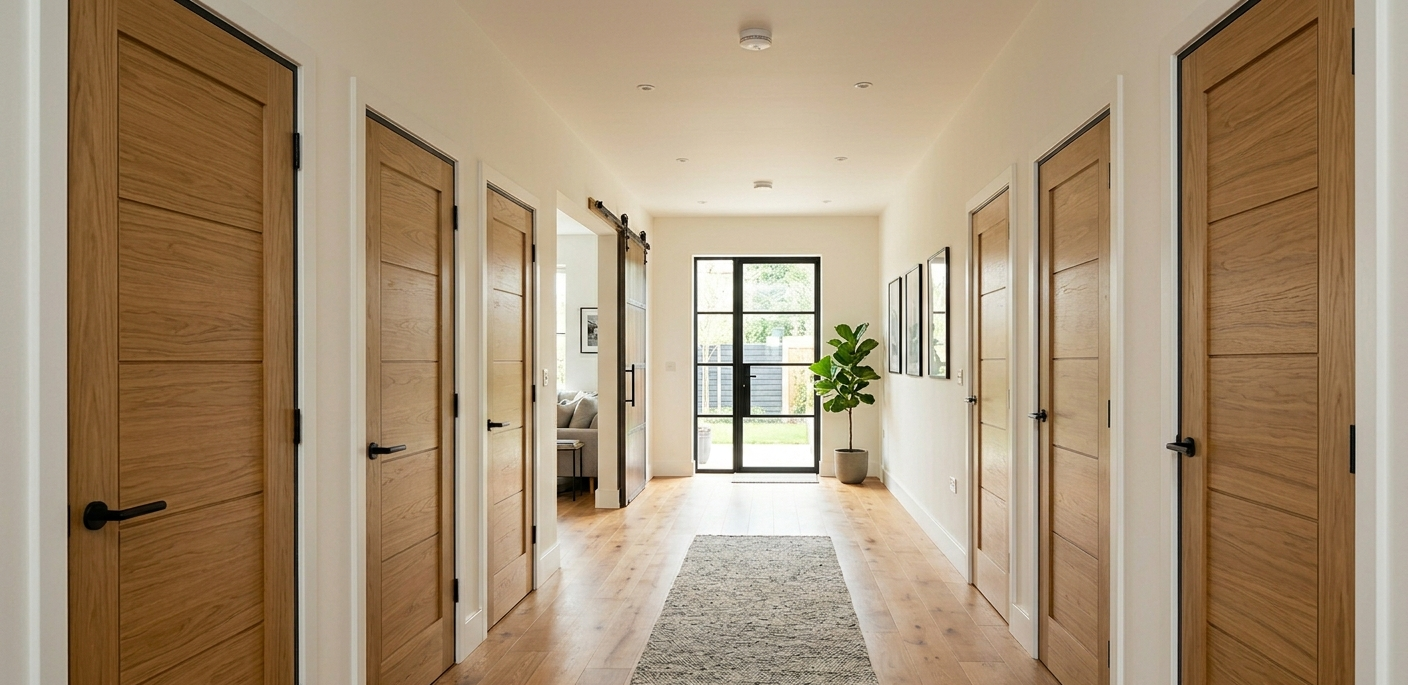
Doors are repeated visual elements. They appear along hallways, landing spaces, room transitions and open-plan breaks. When coordinated well, they can really help the whole interior feel settled and intentional. When they’re not, they can make even a well-designed scheme feel pieced together.
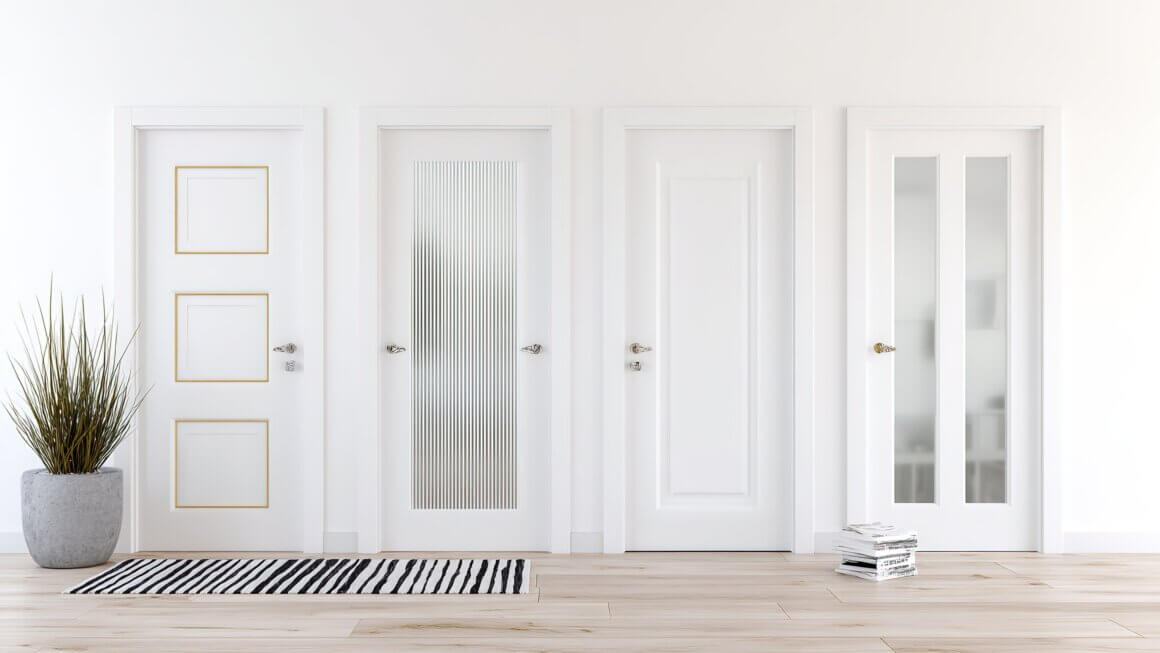
A decent internal door range gives you much more than one style. It gives you a whole ecosystem of options and sizes, allowing you to select from a variety of door types to suit each space while keeping the right style for the property. Ideally, that system would include a variety of:
- Solid doors
- Glazed doors
- Fire-rated doors
- Pocket doors or sliding doors for space-saving solutions
- Finish options – unfinished, primed or pre-finished?
- Sizes suitable for the project type
Choosing the right style and door types ensures your doors complement the overall design and function of the home, supporting both visual cohesion and practical needs.
That consistency becomes even more valuable when you are working across multiple plots or phases. Not only does repeating a strong range help create a cleaner specification process, it reduces unnecessary design decisions and supports a more polished end result.
In short, a range is not just a product family. It is part of how you deliver design consistency at scale.
Start With The Type of Property, Not The Type of Door
A common mistake in specification is to think too narrowly, too early.
Before you compare panel layouts or finishes, it is worth stepping back and asking what the property itself needs the doors to do.
A period terrace renovation usually benefits from something rooted, balanced and quietly traditional. A contemporary extension or architect-designed refurb may need cleaner lines and a more modern profile. A multi-plot development aimed at broad market appeal might need a range that feels current, but not overly trend-led while also offering good value for money.
The point is that the best door range is rarely chosen in isolation. It’s chosen in response to the architecture, the interior language and the end user. The property’s style and personal taste should guide the selection process, ensuring the doors complement the overall interior design.
For example, some ranges work particularly well when you need:
- Broad, safe appeal for resale
- Visual warmth in a minimal interior
- Stronger detailing in a heritage-influenced property
- Cleaner geometry in a more modern scheme
This is why it often makes sense to define the overall mood of the project first. Is it contemporary but accessible? Premium but understated? Heritage-inspired without feeling old-fashioned? Once that is clear, door selection becomes much more strategic.
What type of internal doors are best for a whole-house renovation?
The best internal doors for a whole-house renovation are usually styles that feel consistent, versatile and unlikely to date quickly.
We find that shaker, modern panel, flush doors and understated oak door designs often work well because they can be repeated across multiple rooms without making the interior feel disjointed, especially in modern homes.
Panelled doors are the most common type of internal door, known for their aesthetic appeal and durability, they’re often favoured because they can easily suit both traditional and modern homes.
Think in Terms of Repeatability
A door may look excellent on a sample board or product page, but specification should always ask a more demanding question:
Can this design be repeated confidently across the full project?
That means looking beyond the hero image and thinking about what happens when the door appears:
- – in hallways
- – on upstairs landings
- – in bedrooms
- – beside skirting, flooring and wall colours
- – across several units rather than one show home
Some door styles are attractive individually but become a bit visually tiring when used repeatedly. Others hold up beautifully because they have enough character to feel considered, but enough restraint to work across an entire scheme.
Repeatability is often what separates a clever one-room design decision from a genuinely strong specification choice. High quality doors with strong aesthetic appeal are more likely to succeed when repeated throughout a property as they offer both durability and a cohesive, stylish look across all spaces.
Why Range Depth Matters More Than Most People Think
On real projects, very few door schemes are made up entirely of standard solid doors.
You usually need a mix. There may be glazed doors between circulation areas and living spaces, solid doors for bedrooms, fire doors in key locations and perhaps a requirement for wider or more unusual openings in some parts of the property where room dividers might work best to maximise accessibility.
That is where range depth becomes critical.
A good range should not just include one attractive standard door. It should support the realities of whole-home specification. That means asking things like:
- Is there a matching glazed version?
- Is there an FD30 option available?
- Is there an FD60 variant where needed?
- Does the range still feel coherent across those versions?
- Will the finish and detailing remain consistent?
If the answer is yes to these questions, the range immediately becomes more useful at project scale.
If the answer is no, you may end up making compromises later, usually at exactly the point where consistency matters most.
The construction of internal doors, particularly solid core doors, significantly impacts their soundproofing and thermal comfort, which can directly affect energy efficiency in a home, so it’s worth taking this into consideration too.
Some suppliers also offer expertise in both residential and commercial doors, providing durable and tailored solutions for a variety of settings.
Why is it important to choose a door range rather than individual doors?
Choosing a door range rather than individual doors helps create a more consistent finish across the property. It also makes it easier to specify matching glazed and fire-rated options, which is especially important in whole-home renovations, multi-plot developments and conversions.
Design Consistency is Not The Same as Design Repetition
There is an important distinction here.
Choosing one range does not mean every door must be identical in every context. In fact, the best schemes usually vary intelligently.
Door design and personal style can be expressed through the choice of interior doors, allowing you to tailor each space to your preferences. A set of double doors can connect dining rooms and living spaces, improving flow and light while reflecting your individual style. A glazed door might be used to pull light through from a kitchen or hallway. A solid door may be better for bedrooms or bathrooms. The skill is in making those variations feel related rather than random.
That is why strong ranges are so useful. They allow you to create variation without breaking continuity.
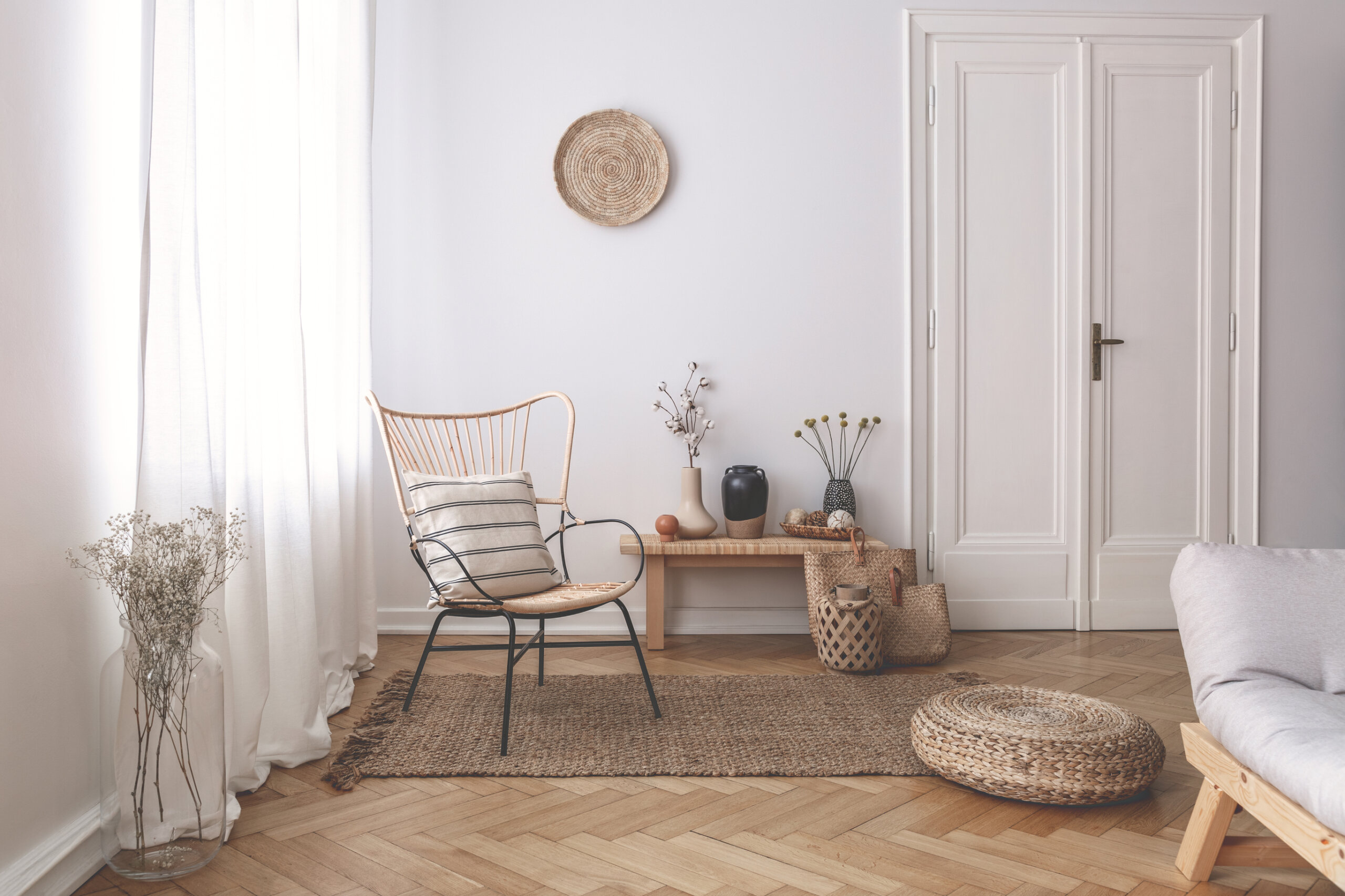
Good specification is not about repeating one door without thinking. It is about using one range with enough discipline that the whole property feels joined up, while each room still works in its own right.
Finish Consistency Matters More on Large Projects
Finish quality and finish consistency can make or break a multi-room or multi-plot door scheme.
This is especially true when:
- Doors are ordered in stages
- Plots are completed over time
- Multiple installers are involved
- The range relies on visible veneers or painted finishes
At a small scale, slight inconsistencies might go unnoticed. Across a full property or several units, they become much more obvious.
Specifiers should think carefully about:
- Veneer tone consistency
- Painted or primed finish quality
- How the range behaves under different lighting conditions
- How easy it is to match later if additional doors are needed
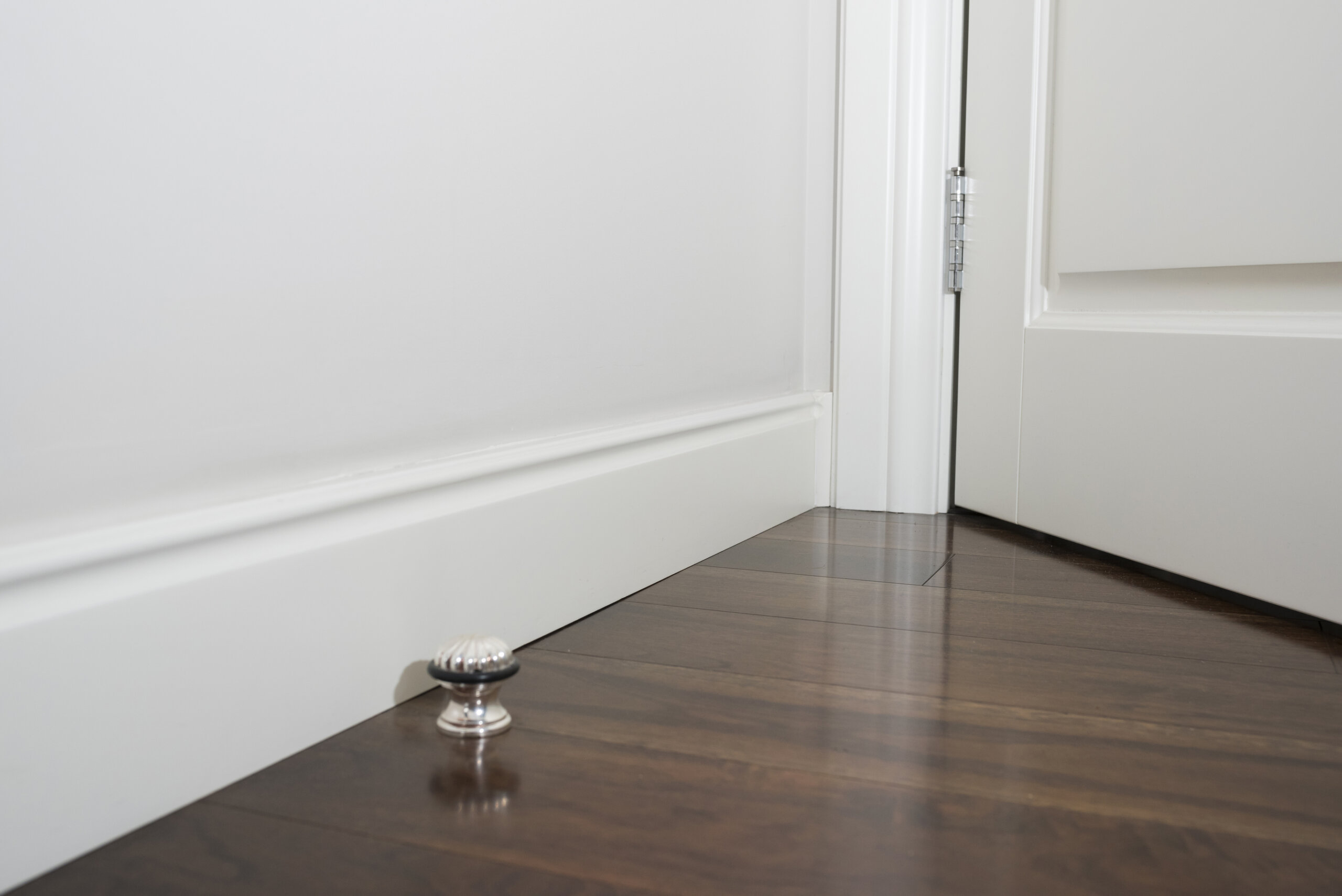
- Selecting matching door hardware and ensuring proper, consistent installation for a high-quality finish across all doors
This is one reason why range selection should never be based on aesthetics alone. A well-specified range needs to be visually dependable as well as attractive.
Before ordering, speak to the supplier/manufacturer about how they manage quality control and design consistency across a range, it’s also worth questioning lead times and availability. This is especially important if you’re planning to order in phases.
Balance Statement Design With Market Longevity
There is always a temptation to go for something bold, especially on premium or design-led projects.
And sometimes that is the right call.
But the bigger the project, the more important it becomes to ask whether the style will still feel right in a few years. Not just in one room, but across the whole scheme.
A very trend-led design may photograph beautifully today, but that doesn’t always make it the best long-term choice for:
- Multi-plot developments
- Resale-focused projects
- Rental properties
- Broader market family homes
The most commercially intelligent door ranges are often the ones that strike a middle ground. They feel current, but not risky. Design-aware, but not overly niche. Strong enough to lift the property but restrained enough to appeal to a wide audience. The perfect door balances the contemporary appeal and the durability of modern doors with options that offer a little more rustic charm and nostalgia, making it suitable for both modern and traditional or country-inspired homes.
That kind of longevity is one of the most underrated qualities in a good door range.
Should all internal doors in a development match?
It’s a question we’re often asked and in most developments, we suggest internal doors should either match or feel closely coordinated. This is all about creating a higher-quality finish and helps the property feel more professionally specified. Variation usually works best when it happens within a single range, such as using glazed and solid versions together.
Practical Specification Still Matters
Even the best-looking range can become a poor choice if it causes avoidable problems during ordering, fitting or later re-specification. Accurate measurements of the door frame are crucial for ensuring a perfect fit and preventing issues during door installation, as improper measurements can lead to doors sticking or needing extensive trimming beyond recommendations.
That is why practical performance should sit alongside design appeal from the start.
On larger projects, specifiers should look closely at:
- Availability of matching fire-rated options
- Practical trimming allowances
- Consistency across standard sizes
- Suitability for typical UK openings
- How easy the range is to reorder
- The long-term durability of the finish
- Compatibility with the intended ironmongery and frames
When measuring for a new door, it is recommended to take three width measurements at the top, middle and bottom of the door frame, using the widest measurement to determine the door’s width.
The right range shouldn’t just look coherent on a schedule. It should behave coherently on site, too. Pre-finished or pre-hung door sets can significantly reduce labour costs and streamline door installation, which is especially beneficial for multi-plot projects with tight timelines.
This is particularly handy on projects with tighter programmes, repeat unit layouts, or phased completions. The easier a range is to work with in real conditions, the more value it tends to deliver overall.
Glazed Doors Should Be Specified With Intent
Glazed internal doors can add a huge amount to a project, but only when they are used deliberately.
They work especially well where you want to:
- Improve light flow in darker areas
- Soften the transition between spaces
- Make a hallway or landing feel less enclosed
- Define a room without making it feel shut off
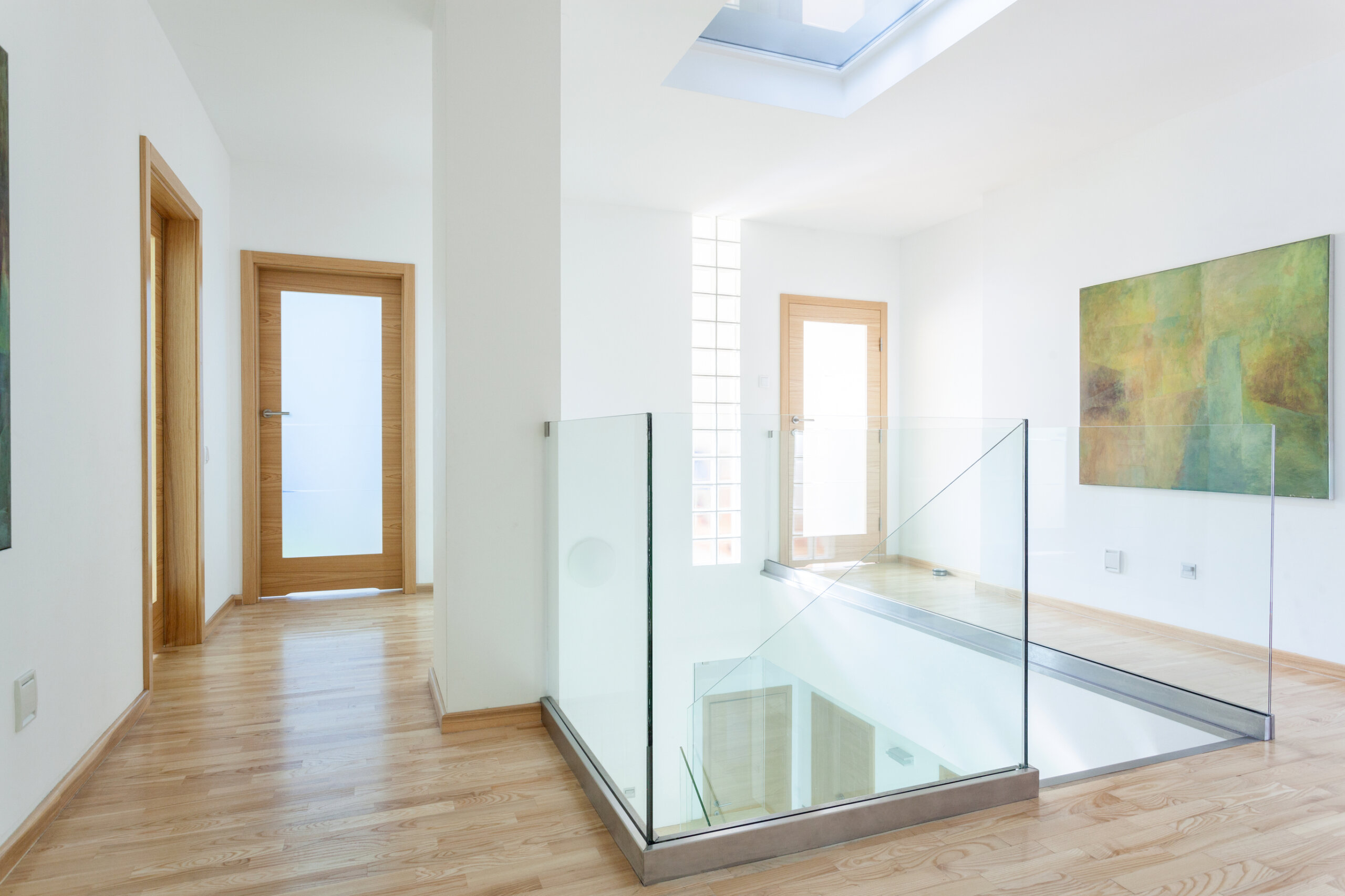
Glazed doors with large glass panels can increase natural light massively, making spaces feel brighter and more open.
In practice, that often means glazed doors suit:
- Kitchen to dining connections
- Home offices (where frosted glass can provide privacy without sacrificing brightness)
- Hallway to living room transitions
- Selected reception spaces
- Dining rooms
But the value of glazed doors depends heavily on how well they sit within the wider range. If the glazed option feels like a true companion to the solid version, the whole scheme benefits. If it feels unrelated, the finish starts to weaken.
This is another reason why range depth is so important. Strong glazed options are not just nice to have. They are often central to making the full scheme work.
Fire Doors Should Be Part of The Scheme, Not An Afterthought
One of the clearest signs of weak planning on a larger project is when fire doors are considered late and end up visibly disrupting the design.
Where fire-rated doors are needed, it makes sense to start with ranges that already offer matching FD30 or FD60 variants. Fire doors can become a larger part of the specification than you might initially think, UK building regulations require fire-rated doors in certain areas, such as between a house and an integral garage or in high-rise buildings. In multi-storey homes, fire doors are needed for all habitable rooms that open onto the main stairwell. Specifying fire doors early allows compliance to be integrated cleanly into the visual scheme rather than patched in later.
If the fire-rated doors do not visually relate to the rest of the range, the inconsistency becomes very obvious very quickly.
Is it better to choose matching fire doors?
Yes. Matching fire doors are usually the best choice because they allow you to meet fire safety needs without disrupting the overall interior scheme. This is especially important in full-property renovations, conversions and larger-scale developments.
Consider How the End User Will Experience the Finished Property
Developers and specifiers often think in terms of drawings, schedules and procurement. Fair enough. But we also have to acknowledge the lived experience of the finished product.
Doors affect how a space feels in more ways than people realise.
They can influence:
- How coherent the interior feels
- How premium the property appears
- How private or acoustically separated rooms feel
- The level of sound insulation between rooms
- The degree of good thermal insulation and energy efficiency throughout the property
- How naturally light moves through the scheme
- How robust and durable the property feels in use
In other words, the end user may never consciously say, “These are well-specified doors.” But they will notice the result through the way the space reads and performs. Good thermal insulation in door construction contributes to a more comfortable and energy-efficient home, while sound insulation improves privacy and quiet. Doors shape perception quietly, but powerfully.
A Framework for Choosing The Right Door Range
If you are comparing options and want a more structured way to assess them, it helps to pressure-test each range against the same set of questions.
- Does it suit the architecture and intended buyer or user? A door should feel natural within the overall scheme, not imposed onto it.
- Can it be used confidently across multiple rooms or units? It should stand up to repetition without becoming visually tiring.
- Is there enough range depth? You want solid, glazed and fire-rated options that all feel like part of the same family.
- Will it still feel relevant in a few years? Short-term impact is one thing. Long-term suitability is another.
- Does it support practical delivery as well as design intent? Availability, consistency, and durability all matter—choose doors made from durable materials such as engineered wood for long-term performance and reliability.
- Is this a cost-effective option? The cost of internal doors can vary widely, so when specifying for a large project, costs can snowball very quickly.
If a range performs well across all six points, it is usually worth serious consideration. Selecting the right doors for construction projects requires balancing aesthetics, security, durability, and building regulations.
Common Mistakes to Avoid
It’s worth calling out some of the mistakes that frequently weaken larger door schemes.
One is choosing a hero design without checking the supporting range. Another is mixing too many unrelated styles in the hope of creating variety. A third is leaving fire door decisions too late, which often forces compromises. And perhaps the most common of all is focusing too much on individual room styling rather than the way the full property will feel once complete.
Choosing hollow core doors is another frequent mistake, as they are lightweight, prone to damage, and offer poor sound insulation compared to solid core doors or solid wood doors. Solid core doors provide superior insulation, durability, and longevity, while solid wood doors are known for their durability and excellent sound insulation, making them a popular choice for both internal and external applications. Solid wood options also offer outstanding thermal insulation and long-term performance.
Most of these problems come back to the same issue: treating doors as isolated products rather than as part of a broader specification system.
Once you start thinking in ranges instead, the decision-making usually becomes clearer.
What internal door style adds the most value?
The internal door styles that tend to add the most value are those that feel high quality, cohesive and broadly appealing. Timeless shaker styles, clean modern panel doors and well-finished oak designs often perform well because they really elevate the overall feel of the property without narrowing buyer appeal.
Solid timber doors with raised panels are especially attractive for period properties, offering durability, sound insulation and classic visuals. In particular, we find 4 and 6 panelled doors are popular choices for period properties, as their traditional design helps keep the character and authenticity of a historic or classic home.
Make Fewer, Better Decisions
At whole-home and multi-plot level, good specification is rarely about choosing more. It’s about choosing better.
The strongest door schemes usually come from selecting a range that can do several jobs at once.
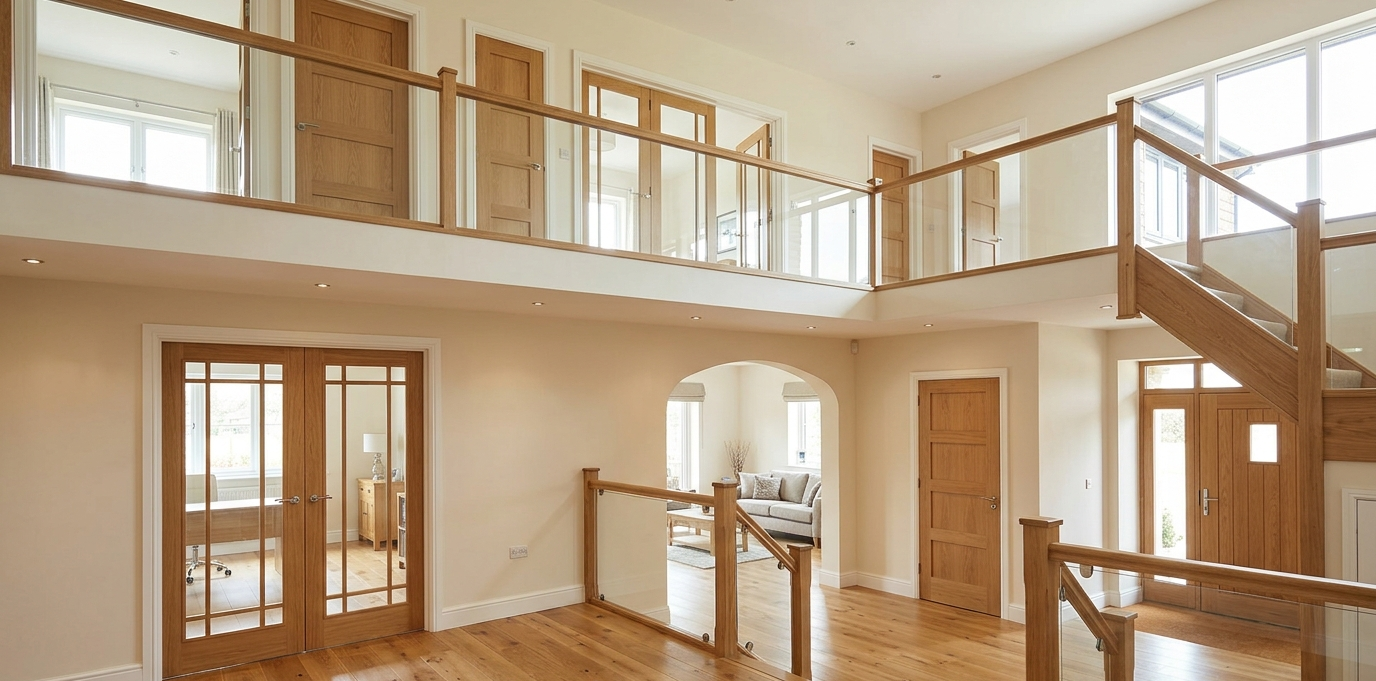
While we’ve focussed on internal doors, when planning, it’s crucial to consider both internal and external doors (including front and back doors) and how they work together throughout the property. The front door, in particular, plays a vital role in home security, insulation and making a good first impression. The style and finish of the front door you choose can then influence the style of interior doors you go for, to really make the most of that visual flow as you step over the threshold.
Likewise, bifold doors and sliding patio doors are perfect for extensions and modern homes, as they maximise space and natural light which help feed any internal glazed door.
French doors, with their large glass panels that open outwards, offer a more classic look that can be mirrored with internal French doors.
That is what makes a range valuable. Not just that it looks good on one page, but that it helps the entire project feel more coherent, more professional and easier to deliver.
For the design-conscious specifier, that is the real goal. A door range should not be a loose collection of nice options. It should be a reliable design tool.
And when you get that right, everything else around it tends to feel more resolved too.