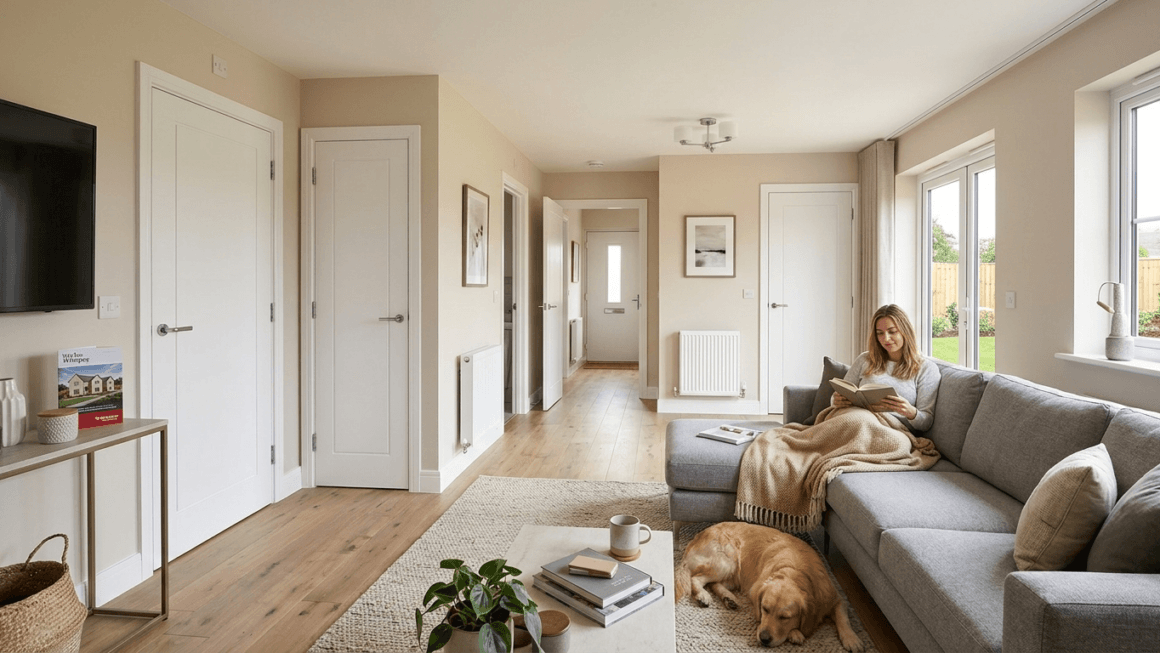


A busy family home isn’t a showroom. It needs to work hard and function well to make life as easy as possible and the doors are usually at the centre of that. Internal doors are pushed open with elbows, nudged by laundry baskets, decorated with fingerprints and occasionally caught in the crossfire of an indoor football match.
That doesn’t mean good design has to give way to pure practicality, though. The right internal doors can withstand everyday family life while helping the entire property feel calm, cohesive and well thought through.
The key is to look beyond colour and panel style. Door construction, surface finish, glazing, hardware, fitting tolerances and ongoing maintenance all influence how well a door will perform.
In this guide, we look at what to prioritise when choosing doors for a high-traffic family home, whether you’re renovating one property, planning a premium refurbishment or specifying the same door family across several homes.
What makes an area “high traffic”?
High-traffic spaces aren’t simply the largest rooms in the house. They’re the through routes and thresholds used repeatedly every day.
This usually includes hallways, kitchens, utility rooms, playrooms and the doors connecting living spaces. Bedroom and bathroom doors may also see heavy use in larger households, while the route between an integral garage and the home brings additional fire-safety considerations too.
Before choosing a door, map how each opening will actually be used because this will often determine what type of door you need.
| Location | Typical pressures | Useful priorities |
| Hallway | Constant use, bags and passing furniture | Robust construction, dependable hardware and a forgiving finish |
| Kitchen or utility | Fingerprints, moisture and frequent cleaning | Sealed, easy-care finish and simple detailing |
| Living room or playroom | Noise, knocks and repeated opening | Solid-core construction and safety glazing where needed |
| Bedroom or nursery | Privacy and household noise | Good fit, sound-dampening core and smooth-closing hardware |
| Bathroom or en-suite | Humidity and privacy | Well-sealed finish, suitable ventilation and frosted glazing if used |
| Garage or protected escape route | Fire-safety requirements | Correctly specified and competent installation |
What type of internal door is best for a busy family home?
For the hardest-working areas, a substantial solid engineered-core door with a durable, fully sealed surface is often the strongest all-round choice. However, it’s important to note that there’s no single door that is best for every room. Construction, finish, hardware and installation need to work together.
Look Beyond the Surface: Door Construction Matters
Two doors can appear almost identical while feeling very different in daily use. Understanding how a door is constructed can be the difference between getting it very right or very wrong.
When comparing solid core doors to hollow core doors, there are a few things to consider that can make all the difference when it comes to where to put them.
A hollow-core door is lightweight and usually made with a solid timber frame that surrounds a honeycomb style internal structure (typically made from cardboard), these are then encased in either wood veneer or laminate to complete the door. A lightweight hollow core door can be perfectly suitable for a cupboard, dressing room or lower-use area.
Hollow core doors can also help stretch a budget across a larger property as they’re generally much cheaper than solid doors. But, they will generally feel less substantial and provide less resistance to impact and sound than a solid-core alternative would, meaning they could end up being a false economy if installed in high-traffic areas.

Solid-core doors on the other hand, have a dense internal structure made from engineered wood that’s surrounded by a solid timber frame, which is then encased in a timber veneer. Their additional weight and robustness creates a more reassuring feel and being made from wood, they’re naturally more insulating, which can improve acoustic and heat separation between rooms. This makes them particularly useful for bedrooms, home offices, playrooms and busy shared spaces.
Semi-solid or tubular-core doors sit somewhere between the two, offering a compromise between weight, performance and cost.
It’s important not to confuse core construction with surface durability though. A solid core will not automatically prevent scratches or stains. The quality of the face material and finish still determine how well the visible surface handles daily contact.

Are solid-core doors better for family homes?
Solid-core doors are often a worthwhile investment in busy family homes because they feel more substantial and can help reduce noise. They’re also easier to strip back and refinish if they start looking a little tired thanks to their real wood veneer.
Choose a Finish That Suits Real Family Life
The finish is the part of the door that meets hands, paws, dust, moisture and cleaning products. It deserves as much attention as the door core.
Laminate Doors
A quality laminate surface is designed to be hardwearing, consistent and easy to maintain. Its smooth finish is relatively straightforward to clean, making laminate internal doors a practical option for hallways, kitchens, utilities, HMOs and other busy residential settings.
Laminate is not indestructible though, so corners and edges should still be protected from hard impacts.
Prefinished Doors
Prefinished internal doors arrive with their decorative finish already applied. This can provide greater consistency across a whole-home project and removes the variables of decorating multiple doors on site.
“Prefinished” doesn’t necessarily mean that no installation work is needed. If the door is trimmed, any newly exposed timber will need resealing in accordance with the manufacturer’s instructions.
Primed Doors
Primed internal doors are a good option when a specific colour is central to the design scheme. Their durability will depend heavily on the preparation and final topcoat, so use an appropriate, washable woodwork finish and follow the paint manufacturer’s guidance.
Keeping a small quantity of the final paint can make later touch-ups much easier too, particularly when the same colour is used throughout several plots or properties.
Unfinished Timber Doors
Unfinished internal doors offer maximum control over the final finish, but they must be decorated correctly. All required faces and edges should be treated within the manufacturer’s stated timeframe, including areas exposed during fitting.
If you’re planning to paint your doors, choosing the right kind of paint for timber doors is a must. Not all paint types are suited to family life, some are much more durable than others and will be much easier to maintain over time.
What is the easiest internal door finish to keep clean?
Smooth laminate and quality factory-finished surfaces are generally among the easiest to maintain and clean. Doors with fewer grooves and mouldings also collect less dust. Whatever the finish, use the cleaning method recommended by the manufacturer and be sure to avoid abrasive pads or harsh chemicals.

Pick a Design That Ages Gracefully
High-traffic does not have to mean visually cautious. It does mean thinking about how a design will look after months of real use though.
Mid-tone timber grain can be forgiving of minor marks, while very dark, smooth doors may show dust and fingerprints more readily. High-gloss finishes can highlight smears and surface imperfections, whereas satin or lower-sheen finishes tend to be more relaxed in daily life.
Panel detailing matters too. A Shaker or streamlined grooved design creates character without introducing too many dust-catching ledges. More decorative mouldings can work beautifully in period properties, but they will take slightly longer to clean and create more opportunity for knocks and dents.
For schemes that need contemporary impact without feeling overly trend-led, the ISEO door range includes both solid and glazed options across several finishes and the pared back design makes them easy to keep. For something with a slightly more rustic edge, Mexicano internal doors offer another versatile design language that can sit comfortably in both modern and more traditional homes without being overly fussy.
Should all the internal doors in a house match?
They don’t have to be identical, but they should feel related. A coordinated door family can include solid doors for private rooms, clear glazing for shared spaces and frosted glass where light and privacy are both needed. Likewise, some ranges offer both solid core and lightweight hollow core options, which means you can really maximise your budget by choosing solid doors for more high traffic areas and lightweight options for quieter spots, without compromising looks.
Repeating the same panel proportions, timber tone or finish creates consistency without forcing every opening to perform the same job. Our guide to matching glazed and solid doors across an entire property explores this approach in more detail.
For a bolder scheme, use statement doors selectively. The hallway, kitchen or main living space can carry a stronger design, while quieter doors support it elsewhere. See our comparison of neutral and statement internal doors for more specification ideas.
Use Glazing Strategically
Glazed doors can make a busy home easier to navigate by sharing natural light between rooms and improving visibility.
Clear glazing works well between hallways, kitchens, dining rooms and living spaces. Frosted or obscure glazing can bring borrowed light into a utility, home office or bathroom while providing more privacy.
In a family home, the type of glass used matters. Always check the individual product specification for suitable safety glazing, particularly when it comes to where glass is positioned in a door or other areas vulnerable to human impact. Any building work in England (which includes replacing doors and windows) should always be considered against the current guidance in Approved Document K (requirements elsewhere in the UK may differ).
Are glazed internal doors safe around children?
They can be! Provided the door uses suitable safety glazing and is installed correctly. Look for glazing information in the product spec rather than assuming every pane performs in the same way. Damaged glazing, loose beads or poorly fitted hardware should be dealt with promptly too to prevent any injuries.
Browse our range of glazed internal doors all of which are supplied with safety glazing as standard. Also, check out our guide if you’d like to learn more about how thoughtful positioning can increase natural light with glazed doors.

Plan for Noise as Well as Knocks
Family homes are busy acoustically as well as physically. Televisions, gaming, homework, washing machines and different bedtimes can all compete with one another.
A dense door leaf can help reduce sound transfer, but the gaps around it matter too. Even a substantial solid-core door will underperform acoustically if it is badly fitted or surrounded by excessive gaps.
For quieter rooms:
- Choose a solid or substantial engineered core.
- Make sure the frame is sound and the door fits evenly.
- Address unnecessary gaps with compatible seals where needed.
- Remember that the walls, floors and ventilation paths also affect sound transfer.
A standard internal door should not be described as fully soundproof unless it has tested acoustic performance. “Better sound reduction” is usually the more accurate aim for regular doors.
Which internal doors are best for reducing noise?
Solid-core doors are generally considered better at reducing everyday sound transfer than lightweight hollow-core doors. As mentioned before, correct fitting is just as important as sound can travel through gaps around the leaf, so the complete opening should be considered rather than the door alone.
For more information, read our guide on creating a quieter home with solid-core internal doors.
Don’t Treat Handles and Hinges as an Afterthought
The door leaf may set the look, but the hardware carries much of the daily workload.
Lever handles are usually intuitive and easy to operate, including for children or anyone with reduced grip strength. Rounded knob designs can feel more forgiving in narrow hallways but can be harder to operate, while a well-sized backplate or rose can help protect the most frequently touched area of the door.
Finish choice can be practical as well as decorative. Satin and brushed finishes often disguise fingerprints better than highly polished metal. Whichever look you choose, be sure to specify the same finish across all handles, hinges, latches and privacy hardware.
The hinges must also be appropriate for the door’s size and weight. A heavier solid-core, glazed or fire door will need a different hinges to a more lightweight door. It’s important to follow the product and hardware instructions rather than relying on a one-size-fits-all approach if you’re installing different types of doors.
Other add-on hardware that can make a huge difference but are often overlooked are door stops and finger guards. Door stops can prevent handles striking walls, which can cause damage to both the door and wall, while finger protectors may be worth considering to prevent injury, particularly in nurseries, playrooms and other vulnerable locations where young children frequent. If you do decide to add these, it’s important to choose the right products, especially if you have fire doors as they shouldn’t compromise any fire-rated assembly.
Explore our range of internal door handles and hardware packs.

Measure Every Opening
Ordering several identical doors doesn’t mean every existing frame will be identical. Older properties frequently have small variations caused by past alterations, movement or layers of flooring.
The best way to make sure you get the right fit for each door is to record the width and height at more than one point, together with the door thickness, frame condition and opening direction. Also factor in any new carpet, tiles or flooring that will be fitted before the doors are hung.
Can internal doors be trimmed to fit an existing frame?
Many internal doors have a permitted trimming allowance, but the amount varies by design, construction, lipping and fire rating (if applicable). Never assume the full visible lipping can be removed. Always check the individual product spec before ordering, don’t assume that every door in the same range has the same lipping sizes either, a glazed variant will have a different lipping size to a fire rated alternative for example. If you’re unsure how much you need to trim, ask a competent joiner to assess unusually shaped or uneven openings.
Our internal door sizing guide explains common UK dimensions, while our guide to cutting internal doors to size covers trimming in more detail. If you find that standard sizes just won’t work, bespoke made to measure internal doors may be the better option.
Give Fire Doors Some Consideration
A fire door is not simply a heavier version of a standard internal door. It can literally be a life saver in a family home. But, its performance depends on the complete assembly, which will include the certified door leaf, frame, any glazing, hinges, seals, latch and self-closing device.
Which fire door rating you’ll need will entirely depend on the property type, layout, location and nature of its intended use. For example, if you’re adding fire doors to protected escape routes, loft conversions or connecting to integral garages, these may introduce specific requirements.
Do I need to put fire doors in a family home?
Possibly. It all depends on the building layout and the work being carried out. Ask building control or a competent fire-door professional to confirm what you need for your project. If you’re in England, consult the current version of Approved Document B to learn more (Scotland, Wales and Northern Ireland have their own guidance).
Where a fire door is needed, choose a certified product with compatible components and arrange competent installation. It’s important you don’t exceed the permitted trimming allowances or change the glazing in a fire door as this can invalidate its certification.
Likewise, once the door has been installed, don’t be tempted to wedge it open. If having a closed door at all times doesn’t really work for the flow of your space or day to day living, maybe look at alternative options or placement.
We understand the need for consistency when it comes to style, that’s why our collection of internal fire doors includes a wide variety of solid and glazed styles across a range of finishes, helping fire safety sit more comfortably within a coordinated interior scheme.
How can you make internal doors last longer?
There’s a lot more demand put on internal doors in family homes, but good maintenance is usually simple and the key to longevity for a door. The important thing is dealing with small problems before they become larger ones.
Wipe dirty marks using a soft cloth and a cleaning method suitable for the finish. Remove surface moisture quickly and ventilate well, especially in bathrooms and utility rooms. Periodically check that hinges remain secure, handles don’t wobble and latches engage without the door needing to be forced. Touch up any knocks or chips in the paintwork quickly to avoid any larger problems developing.
If a door begins rubbing, sticking or dropping, investigate the cause rather than repeatedly pushing it shut. A loose hinge may be straightforward to correct, whereas moisture movement or frame distortion may need more attention.
Our guide to fixing internal doors that will not open or close can help identify common causes and mitigate any issues going forward.

High-Traffic Door Specification Checklist
Before committing to and placing an order for a certain type of door, ask yourself the following questions:
- How frequently will this opening be used?
- Is impact resistance or easy cleaning the greater priority?
- Would a solid core improve privacy or noise control?
- Does the finish disguise fingerprints and allow sensible maintenance?
- Is clear, frosted or no glazing most appropriate?
- Does the range include matching solid, glazed and fire-rated variants?
- Are the frame, hinges and hardware suitable for the door’s weight?
- Have all openings been measured individually?
- Have the permitted trimming allowances been checked?
- Are there any fire-safety or safety-glazing requirements?
- Is stock available across the full door schedule?
- Can replacement hardware or matching doors be sourced later?
If all of these points are considered and the doors you’ve chosen fit the bill, you’re definitely heading in the right direction.
Doors Designed for Real Homes
The best door for a family home isn’t necessarily the most expensive, heaviest or most fashionable option. It’s the one specified perfectly for its location and supported by the right finish, hardware and installation.
Our advice is to prioritise stronger cores where noise and impact matter. Choose forgiving, easily maintainable surfaces for the busiest routes. Use glazing to improve light and visibility, and select a coordinated range that allows each room to function properly without making the wider scheme feel disjointed.
Explore our full collection of internal doors, or contact the Vibrant Doors team for help comparing constructions, finishes, sizes and matching options for your project.